
What Is AdBlue and Does My Car Have It?
Manufacturers of diesel vehicles are forced to use solutions that allow their vehicles to meet emission limits. One of these solutions is the AdBlue liquid additive. Its purpose is to reduce nitrogen oxide emissions in exhaust gases. Although AdBlue does not need topping up very often, it is useful to know at least a little about how it works. For example, because once it runs out completely, the vehicle cannot be started again.
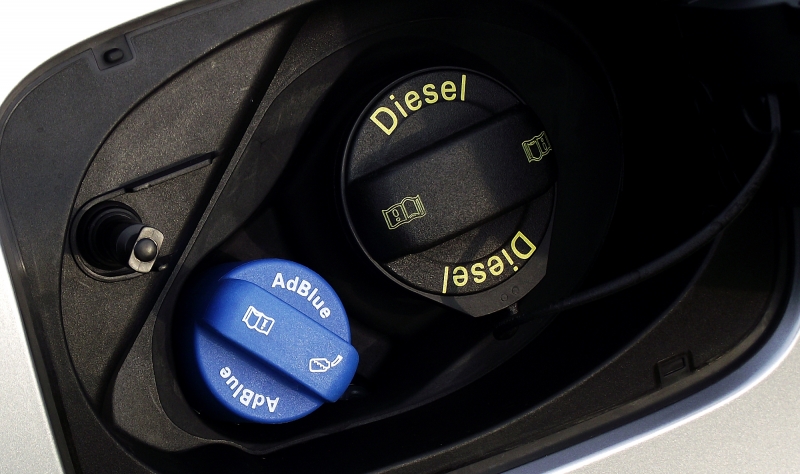
AdBlue is a liquid additive in the form of a high-quality 32.5% urea solution in demineralized water. It is a non-toxic and non-flammable substance also known as AUS 32. This name comes from the term Aqueous Urea Solution.
In diesel engines, AdBlue is used to reduce nitrogen oxides in exhaust gases through selective catalytic reduction: exhaust gases first pass through the particulate filter, which removes soot. The AdBlue solution is then automatically injected into the exhaust system, where a chemical reaction breaks nitrogen oxides down into nitrogen and water (steam). These harmless substances then leave through the exhaust.
Thanks to this process, vehicles are able to meet Euro 4 and higher emission standards. Some manufacturers install this system in all diesel vehicles, while others use it only on heavier and more powerful models.